


Multiple industry reports over the last two years indicate that India remains the top offshore destination for GCC companies due to talent depth, operational maturity, and cost scalability—particularly for shared services and technology functions.
By 2026, the question for most GCC companies is no longer whether to expand into India, but how to do it without creating operational drag. India has become the default offshore and expansion destination for GCC firms across technology, engineering, shared services, analytics, and operations—not because it is cheap, but because it offers depth, scalability, and execution maturity that few markets can match.
What has changed over the last few years is the profile of GCC companies entering India. These are no longer experimental offshore pilots. They are serious operating extensions teams expected to deliver outcomes, integrate with core business units, and scale predictably. As a result, the model chosen to enter India has become more critical than the city, the talent partner, or even the cost arbitrage.
In practice, most expansion challenges faced by GCC companies in India do not stem from talent availability. They stem from model mismatch. Companies either build too early, buy without integration readiness, or underestimate the operational burden that comes with direct ownership. The result is slow ramp-up, leadership fatigue, compliance surprises, and teams that never quite reach their intended potential.
India offers multiple entry paths Build, Buy, and BOT (Build-Operate-Transfer) but each comes with distinct implications around control, risk, speed, and long-term flexibility. The right choice depends less on ambition and more on organizational readiness. A model that works well for a global enterprise may be completely unsuitable for a mid-sized GCC firm entering India for the first time.
By 2026, BOT models have gained significant traction among GCC companies because they address a specific reality: most organizations want operational control in India, but not on day one. They want to learn the market, test leadership structures, stabilize delivery, and only then assume full ownership. BOT provides that bridge, while Build and Buy remain relevant in more specific scenarios.
This guide is written for decision-makers who are evaluating India not as a cost center, but as a strategic operating base. It breaks down Build vs Buy vs BOT models through the lens of GCC companies expanding into India, focusing on execution risk, control timelines, and long-term scalability rather than theory or generic market commentary.
When GCC companies talk about expanding into India, the conversation often gets simplified into cost, headcount, or speed. In reality, the decision comes down to how much control a company wants, how quickly it needs results, and how much operational risk it is prepared to absorb upfront. This is where the Build, Buy, and BOT models differ fundamentally.
The Build model involves setting up operations in India from scratch. The company incorporates a local entity, hires leadership and teams directly, manages compliance, and owns the operation from day one. This approach offers maximum control and long-term alignment, but it also requires significant time, management bandwidth, and familiarity with India’s regulatory and talent landscape.
For GCC companies, Build works best when India is a long-term strategic hub and the organization already has the scale, leadership depth, and patience to manage early-stage complexity.
The Buy model typically involves acquiring an existing Indian company, team, or operation to gain immediate scale and capability. In theory, this accelerates entry and reduces setup time. In practice, integration is where most challenges surface—especially around culture, governance, compensation structures, and leadership alignment.
For GCC firms, Buy can work when there is strong post-acquisition integration capability and a clear plan to align operating models. Without that, speed often comes at the cost of control and consistency.
The BOT model is a phased entry approach where a local partner builds and operates the India operation on behalf of the GCC company for an agreed period, after which ownership is transferred. During the operate phase, the GCC company gains visibility, governance, and decision rights while the partner manages execution and compliance.
In India, BOT has emerged as a preferred entry model for GCC companies that want eventual ownership but prefer to reduce early-stage risk. It allows organizations to stabilize delivery, assess leadership capability, and understand operating realities before fully taking control.
Build, Buy, and BOT are not interchangeable options. Each model shapes how quickly teams ramp up, how risks are absorbed, and how leadership attention is allocated in the first 12–24 months. Choosing the wrong model often leads to friction that no amount of talent or investment can easily fix later.
Understanding these models clearly is the foundation for making the right India expansion decision. The sections that follow break down when each approach works, where it fails, and why BOT has become increasingly relevant for GCC companies entering India in 2026.
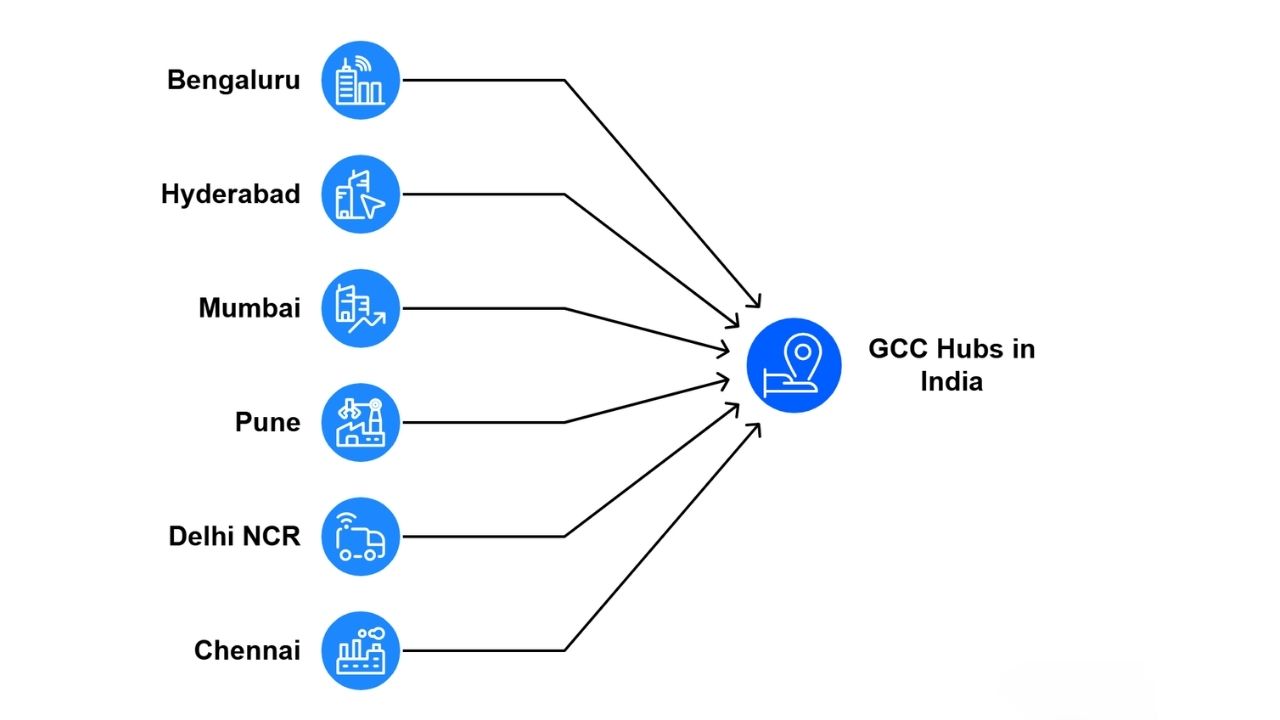
Most GCC companies don’t struggle because they chose the wrong city in India. They struggle because they chose the right city with the wrong operating model.
For many GCC companies, the instinctive response to India expansion is to build from scratch. Full ownership feels clean, decisive, and strategically sound. On paper, the Build model offers maximum control over hiring, culture, processes, and long-term direction. In practice, it also places the full weight of execution risk on the organization from day one.
Building operations in India requires far more than entity registration and recruitment. Leadership hiring, compliance management, vendor relationships, payroll governance, and cultural integration all demand sustained attention. For GCC firms without prior India operating experience, these demands often surface as hidden complexity rather than visible cost.
Where the Build model works well is in organizations that already operate at scale and have clarity on India’s role in their global structure. Large enterprises with experienced local leadership, patient investment horizons, and well-defined operating playbooks can absorb the slower ramp-up and early inefficiencies that come with building independently. For these companies, control is not a future objective, it is a non-negotiable requirement from the outset.
The challenges arise when Build is chosen prematurely. Many mid-sized GCC companies underestimate the time it takes to hire capable middle management, stabilize delivery standards, and align India teams with headquarters expectations. What begins as a cost-efficient plan often turns into leadership overload, with senior executives pulled into day-to-day operational decisions they did not anticipate managing.
Another overlooked factor is compliance and people risk. Labour regulations, statutory benefits, payroll structuring, and attrition dynamics in India differ significantly from the GCC. Early missteps such as poor hiring decisions or inconsistent HR practices—can take months to correct and have lasting effects on team morale and productivity.
In 2026, the Build model remains a strong option for GCC companies that have already validated their India strategy and are prepared to invest in leadership depth and operational resilience. However, for organizations entering India for the first time, building too early often creates friction that delays outcomes rather than accelerating them.
The key question leaders should ask is not whether they want control, but whether they are ready to manage the full operational burden that comes with it on day one.
The Buy model is often attractive to GCC companies because it promises immediate presence in India. Acquiring an existing firm, team, or operating unit appears to remove the uncertainty of building from scratch. However, in India, speed is rarely the hardest part. Integration is.
The primary appeal of the Buy model is acceleration. By acquiring an established operation, companies gain access to ready teams, ongoing client delivery, and local leadership. For GCC firms under pressure to scale quickly or demonstrate progress to stakeholders, Buy can feel like the most decisive option.
In cases where India is expected to become a large, strategic hub, Buy may also offer an opportunity to acquire domain expertise or niche capabilities that would take years to build organically.
In practice, post-acquisition integration is the defining challenge. Cultural alignment, governance standards, reporting structures, and compensation frameworks often differ significantly between Indian firms and GCC parent organizations. Without a clear integration plan, acquired teams may continue operating independently, creating silos rather than synergies.
Leadership alignment is another frequent issue. Founders or senior managers of the acquired entity may not adapt easily to new decision-making processes or performance expectations. This can lead to attrition at the leadership level—undermining the very stability the acquisition was meant to provide.
Acquiring an Indian entity does not eliminate compliance responsibility; it transfers it. Labour law adherence, payroll governance, statutory benefits, and contract alignment must be reviewed and often restructured post-acquisition. Many GCC companies discover compliance gaps only after taking ownership, when correction becomes more disruptive and costly.
Operational systems—HR platforms, finance workflows, and reporting tools—also require harmonization. Without early investment in systems integration, companies risk operating with fragmented data and inconsistent controls.
The Buy model tends to work best for GCC companies with strong integration capability and dedicated leadership bandwidth. Organizations that have experience managing acquisitions, particularly in India or similar markets, are better positioned to realize value from Buy.
Where integration planning is treated as a strategic initiative rather than an afterthought, Buy can provide speed without sacrificing long-term control. Without that discipline, however, the model often trades early momentum for prolonged complexity.
In the context of GCC companies entering India in 2026, Buy remains a viable option—but only when integration readiness is assessed as rigorously as valuation and deal structure.
BOT works best when leadership wants ownership—but not the learning curve upfront.
By 2026, the Build-Operate-Transfer (BOT) model has moved from being a niche alternative to a mainstream entry strategy for GCC companies expanding into India. This shift is not driven by convenience; it is driven by experience. Many organizations have learned often the hard way that direct ownership from day one is not always the most efficient path to long-term control.
At its core, the BOT model is designed to separate ownership ambition from early-stage execution risk. A local partner builds the India operation, manages day-to-day execution, and ensures compliance during the initial phase, while the GCC company retains strategic oversight and a clear path to eventual ownership.
In a BOT setup, the partner is responsible for setting up infrastructure, hiring teams, managing payroll and HR compliance, and stabilizing operations. During this operational phase, the GCC company remains closely involved—defining governance standards, approving leadership roles, and monitoring performance. The transfer phase occurs once predefined milestones are met, at which point the operation transitions fully under the company’s ownership.
What distinguishes effective BOT arrangements is clarity. Successful models are built around well-defined timelines, transparent cost structures, and explicit transfer conditions. This reduces ambiguity and ensures that the transition to ownership is deliberate rather than rushed.
For GCC companies, BOT aligns well with organizational realities. Many firms want India to become a strategic delivery hub, but lack hands-on experience managing Indian operations at scale. BOT provides a learning curve without forcing leadership teams to absorb every operational risk immediately.
It also addresses a common concern among GCC leaders: loss of control. Unlike pure outsourcing, BOT is structured with ownership as the end goal. Governance frameworks, reporting lines, and cultural alignment are established early, making the eventual transfer smoother and less disruptive.
One of the most practical advantages of the BOT model is risk insulation. Early-stage challenges such as hiring delays, compliance adjustments, or leadership changes are absorbed within the operating phase, when the partner is accountable for stabilization. This allows the GCC company to assess performance objectively before committing to full ownership.
Importantly, BOT does not lock companies into indefinite dependence. Well-structured agreements provide exit options, milestone-based reviews, and flexibility to adjust scope as the India strategy evolves.
BOT is particularly well-suited for GCC companies entering India for the first time, scaling new functions, or operating without deep local leadership. It is also effective for organizations that value speed and predictability but want to avoid the long-term constraints of outsourcing.
In 2026, BOT is best understood not as a shortcut, but as a strategic bridge, one that allows GCC companies to move from intent to ownership with confidence, discipline, and reduced execution risk.
When GCC leaders evaluate India expansion models, the decision often gets framed as a preference—control versus speed, ownership versus flexibility. In reality, Build, Buy, and BOT solve different problems at different stages of organizational maturity. Comparing them side by side brings clarity to what each model actually delivers in practice.
The table below outlines how these models differ across the factors that matter most to GCC companies entering India in 2026.
The Build model offers maximum control, but it also concentrates risk. Every hiring decision, compliance issue, and leadership gap must be addressed internally, often before teams have stabilized. For large GCC enterprises with existing India experience, this trade-off can be acceptable. For first-time entrants, it frequently slows progress.
The Buy model delivers speed on paper, but that speed often shifts complexity into the integration phase. Cultural misalignment, leadership churn, and inherited compliance gaps can dilute the initial advantage. Buy works best when integration capability is strong and leadership is prepared for sustained involvement post-acquisition.
The BOT model occupies the middle ground—but in a deliberate way. It reduces early execution risk without sacrificing long-term ownership. For GCC companies that want India to become a strategic operating base, but prefer to validate leadership, processes, and delivery before taking full control, BOT provides a more balanced risk–reward equation.
In 2026, many GCC companies choose BOT not because it is easier, but because it is more forgiving. It allows organizations to learn India’s operating realities, build confidence in teams, and transition ownership once the foundation is stable. The result is often faster time to value with fewer irreversible decisions early on.
This comparison makes one thing clear: there is no universally “best” model. The right choice depends on scale, experience, leadership readiness, and risk appetite. The sections that follow focus on how GCC companies can align these factors to choose the model that fits their India strategy—not just their ambition.
Most GCC companies do not struggle in India because of intent or investment. They struggle because of misread risk. India is often viewed as a mature offshore destination, which leads leaders to assume that operational complexity will be manageable from day one. In reality, several India-specific risks surface only after teams are already in place.
Hiring talent in India is rarely the bottleneck. Hiring the right leadership is. Many GCC firms assume that strong individual contributors can quickly step into managerial roles. What often gets missed is the gap between delivery capability and people leadership. Without experienced middle management, teams scale faster than governance, leading to inconsistent outcomes and attrition.
Attrition in India is not always a reflection of culture or compensation. In many sectors, it is a structural feature of the market. Companies entering India for the first time often underestimate how quickly teams can churn during the first 12–18 months, especially if roles, growth paths, or leadership expectations are unclear. Early instability can compound rapidly if not addressed systematically.
India’s labour, payroll, and statutory compliance environment requires continuous attention. Many GCC companies treat compliance as a setup task rather than an operating discipline. Delays in statutory filings, misaligned payroll structures, or inconsistent HR practices may not surface immediately but they create exposure that becomes difficult to unwind later.
Cultural alignment challenges are rarely about language or professionalism. They are about decision-making speed, escalation norms, and expectations around autonomy. GCC leadership styles and Indian team expectations do not always align naturally. Without intentional alignment, misunderstandings can slow execution and erode trust on both sides.
India’s cost advantage can sometimes hide inefficiencies that would be unacceptable elsewhere. Teams may scale before processes are stable, simply because costs appear manageable. Over time, this leads to bloated structures and uneven productivity. Companies that focus only on cost savings often realize too late that efficiency, not affordability, drives long-term value.
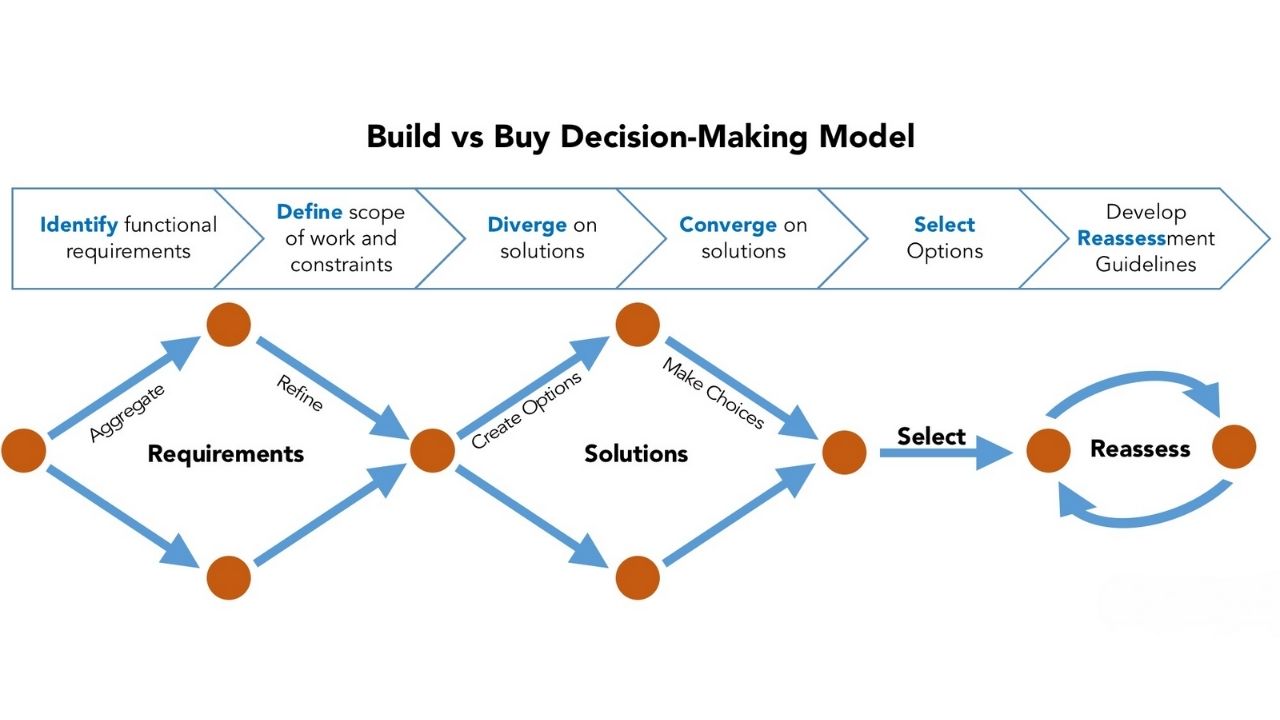
By the time GCC companies reach the decision stage, the challenge is rarely understanding what Build, Buy, and BOT mean. The real challenge is choosing the model that fits the organization’s current readiness, not just its long-term ambition. A practical decision framework helps cut through preference and focus on execution reality.
The first question leaders should ask is how prepared the organization is to manage India operations on a day-to-day basis. Companies with experienced India leadership, mature governance structures, and dedicated operational bandwidth are better positioned to handle the demands of a Build model. Without those foundations, full ownership can stretch leadership thin and slow progress.
Time pressure plays a critical role. If India teams are expected to deliver measurable outcomes within months rather than years, Build may introduce delays that the business cannot afford. Buy and BOT both offer faster time to impact, but BOT provides a more controlled ramp-up, particularly when internal teams are still learning the market.
Every model carries risk, but the distribution of that risk differs. Build concentrates risk internally from day one. Buy shifts risk into integration and cultural alignment. BOT spreads risk over time, allowing companies to validate assumptions before taking full ownership. Leaders should be clear about how much early-stage uncertainty the organization can realistically absorb.
Many GCC companies want full control over their India operations eventually. The key distinction is whether that control is needed immediately or can be phased. BOT works best when ownership is a destination rather than a starting point. Build makes sense when control cannot be compromised at any stage.
India expansion is not a passive initiative. It demands sustained leadership involvement, particularly in the first year. If senior leaders are already managing multiple priorities, BOT can act as a buffer, allowing the organization to build confidence and capability before assuming full operational responsibility.
In practice, the framework often looks like this:
This is not a rigid rule, but a pattern observed across multiple GCC → India expansions. The right choice is the one that balances speed, control, and risk in a way the organization can sustain—not just launch.
For GCC companies, expanding into India in 2026 is no longer an exploratory move. It is a strategic decision with long-term implications for cost structure, talent access, and operating resilience. The real differentiator is not the decision to enter India, but the model chosen to do so.
Build, Buy, and BOT each serve a purpose, but they are effective under different conditions. Build rewards organizations with maturity, leadership depth, and patience. Buy accelerates entry but demands disciplined integration. BOT offers a phased path allowing companies to reduce early execution risk while working toward full ownership once operations are stable.
What consistently separates successful expansions from stalled ones is alignment. When the expansion model aligns with organizational readiness, leadership bandwidth, and risk appetite, India becomes a source of sustained advantage rather than ongoing complexity. When it does not, even well-funded initiatives struggle to deliver expected outcomes.
In 2026, BOT is best understood not as a shortcut, but as a strategic bridge. It allows GCC companies to move deliberately from intent to execution to ownership without forcing irreversible decisions too early. For many organizations, this measured approach is what turns India from a promising market into a reliable operating base.
Ultimately, the right model is the one your organization can execute consistently, not just approve on paper. Leaders who choose with that mindset are far more likely to build India operations that scale, integrate, and endure.